How to Talk Like a Healthcare Management Robot

A field guide to saying nothing, beautifully.
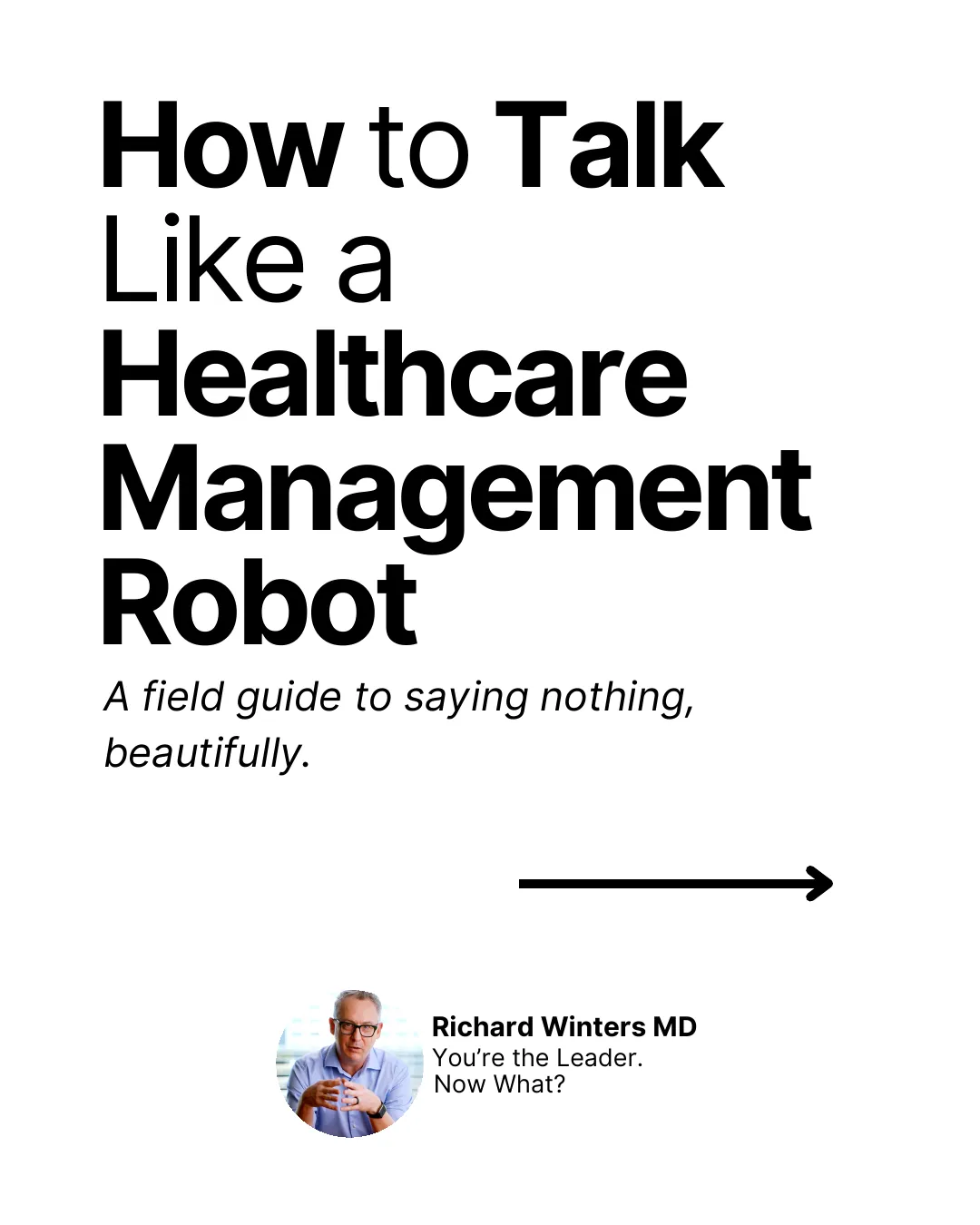
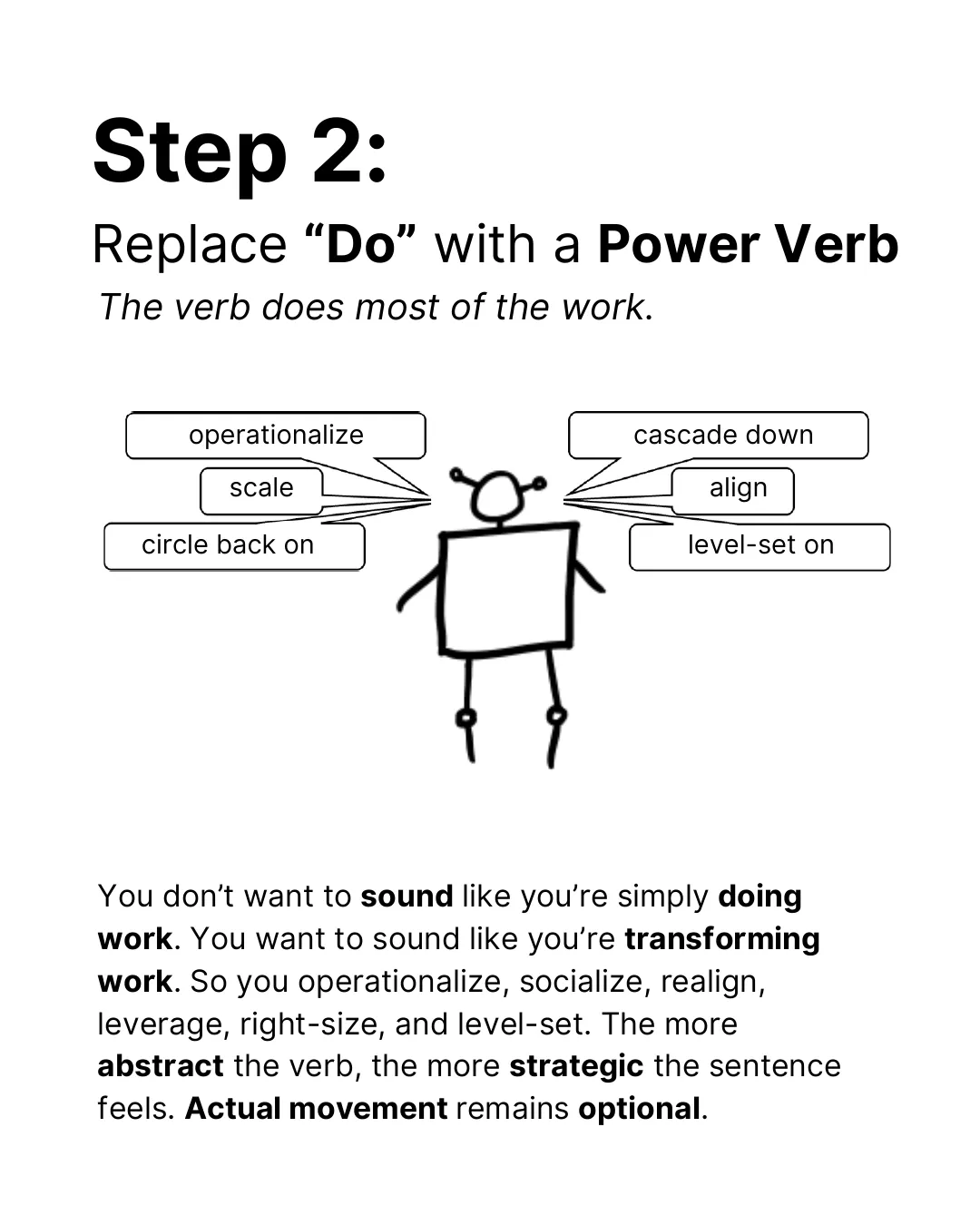
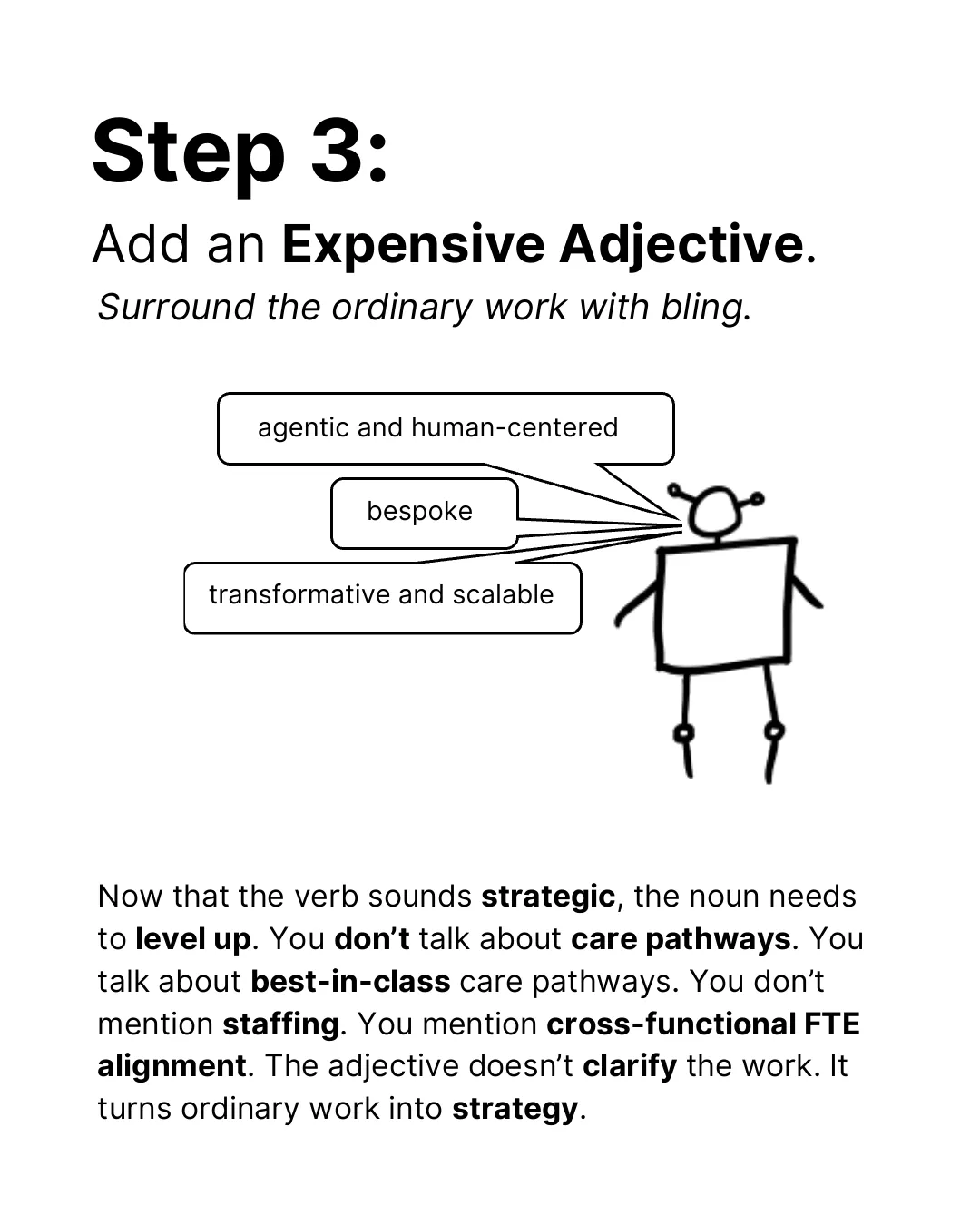
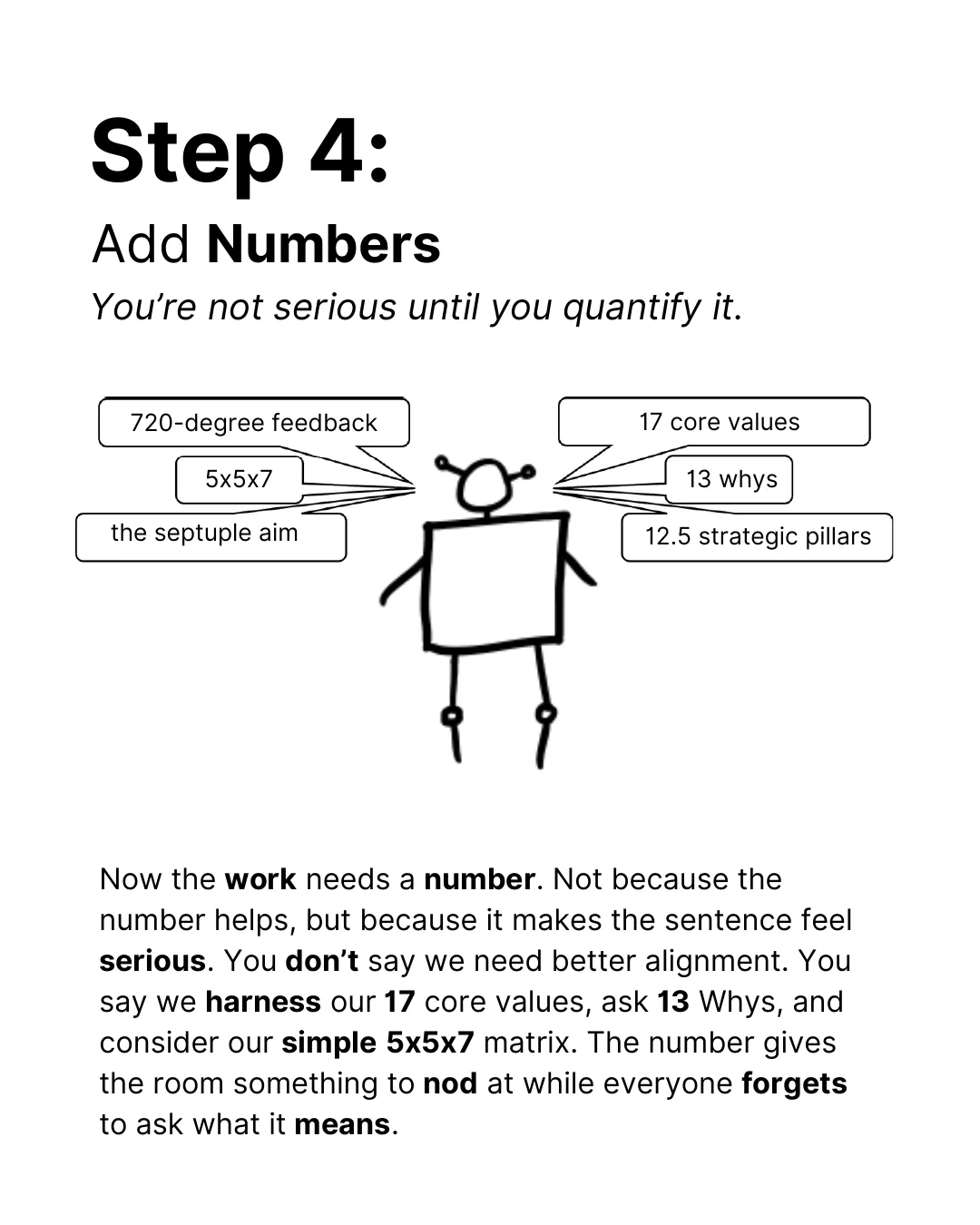
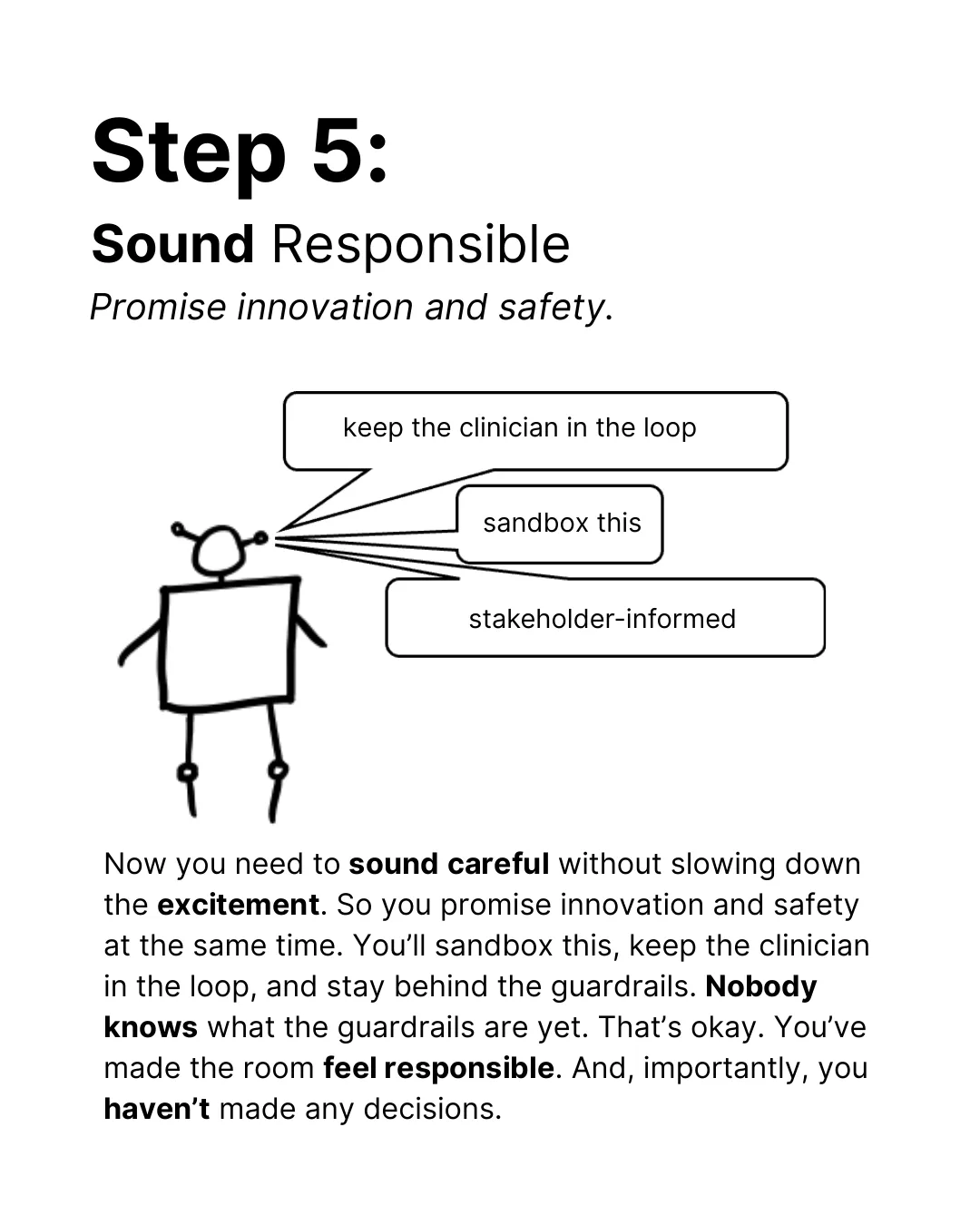
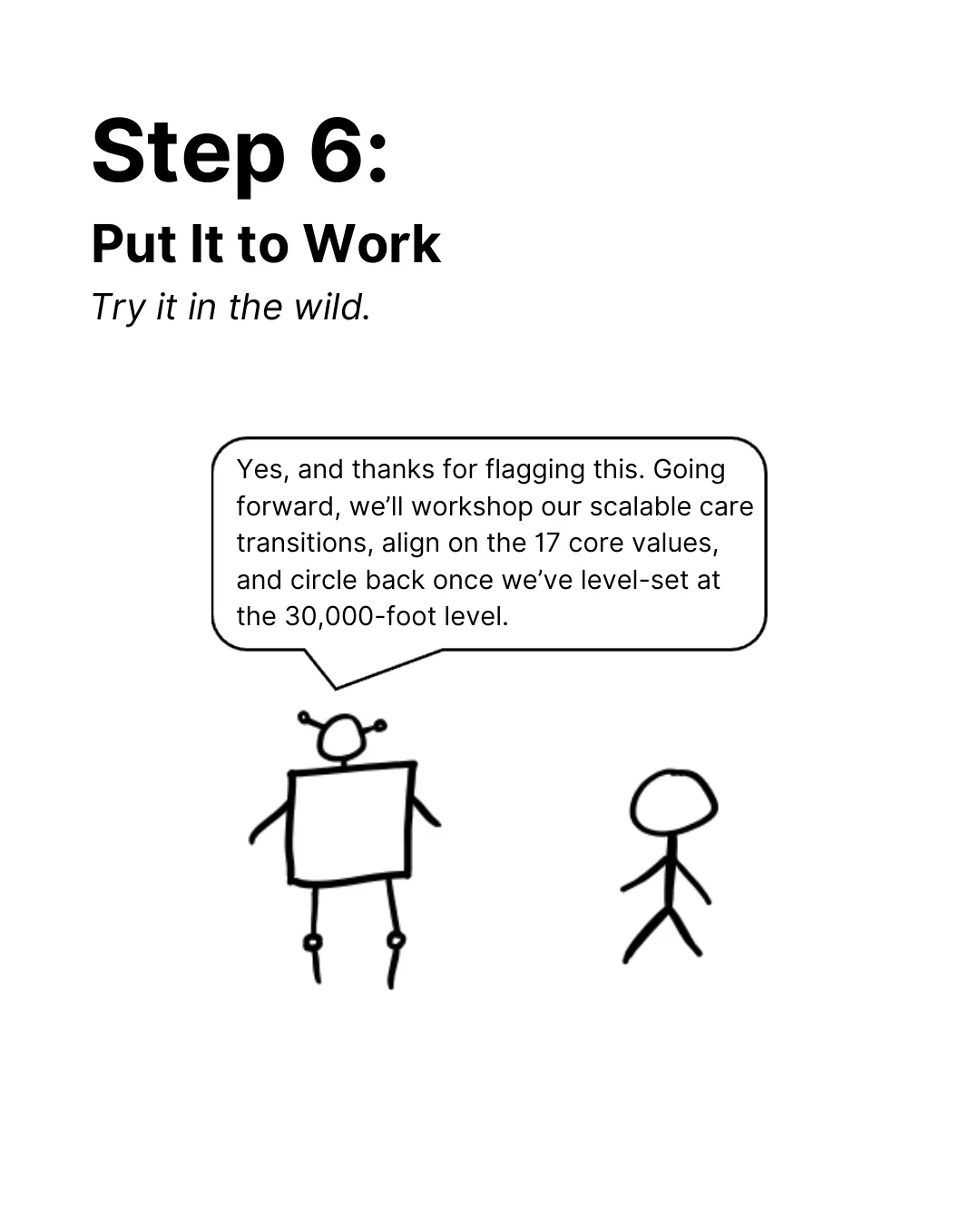
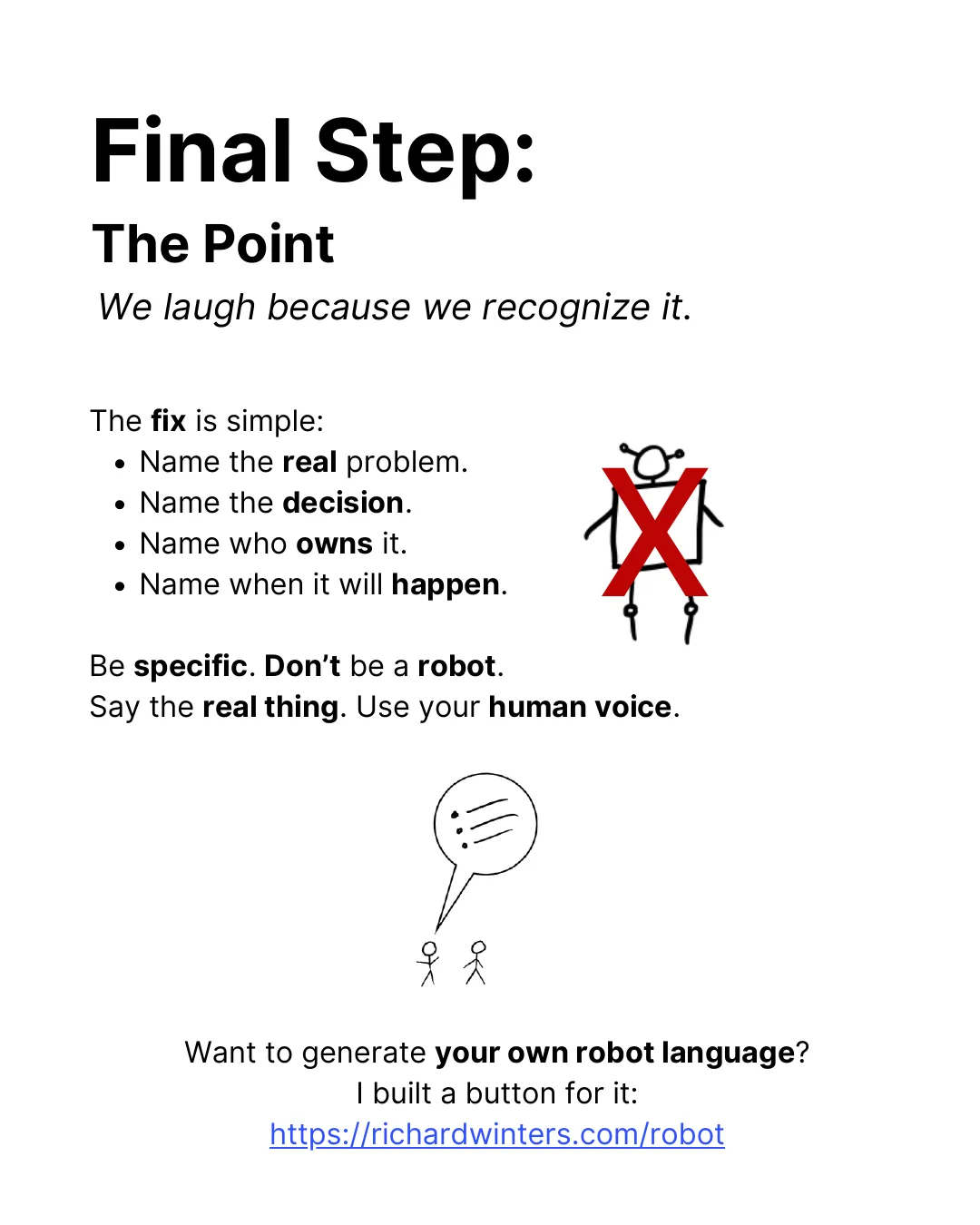
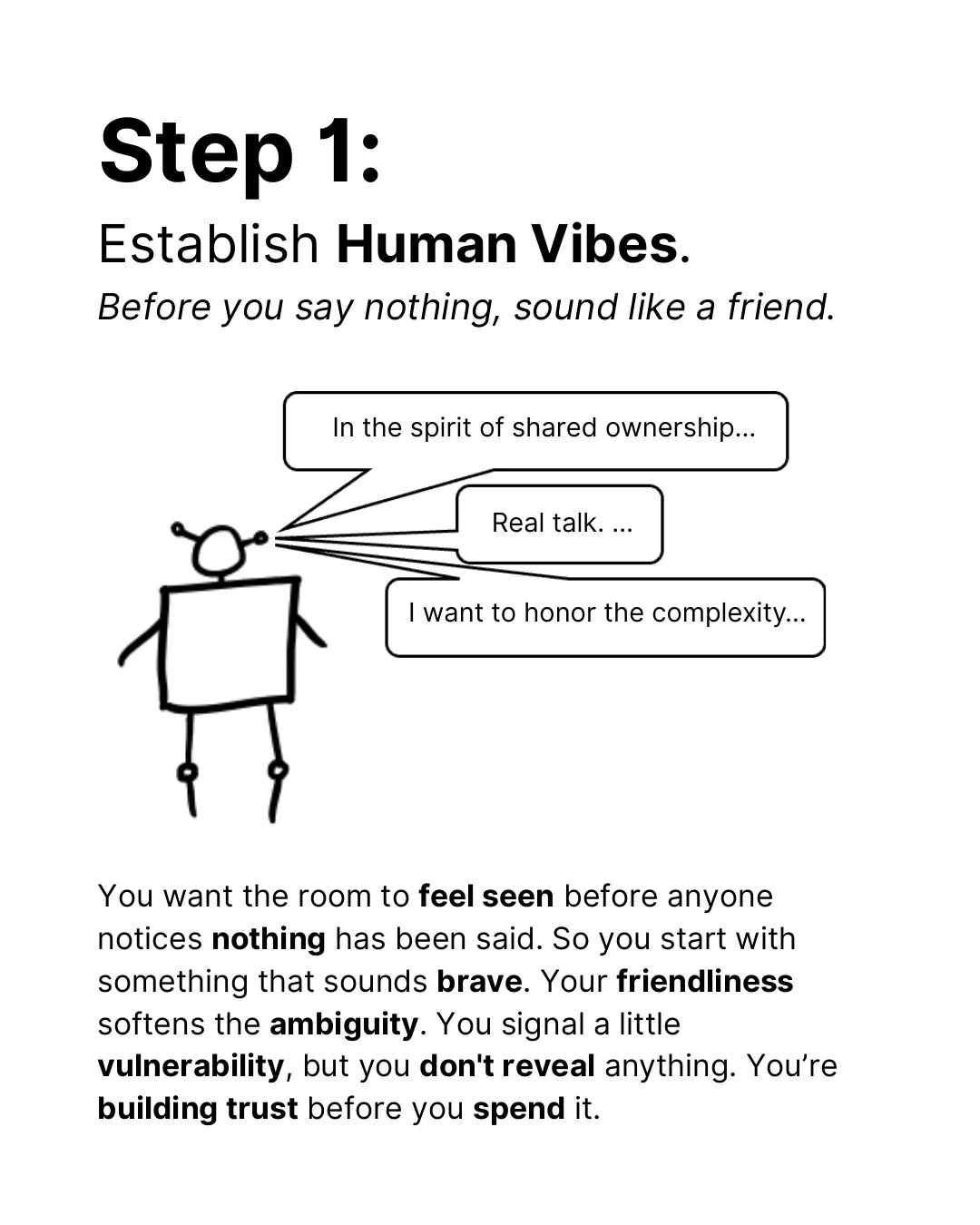
How to Talk Like a Healthcare Management Robot. A field guide to saying nothing, beautifully. Step 1: Establish human vibes. Before you say nothing, sound like a friend. The robot says: In the spirit of shared ownership. Real talk. I want to honor the complexity. You want the room to feel seen before anyone notices nothing has been said. So you start with something that sounds brave. Your friendliness softens the ambiguity. You signal a little vulnerability, but you don’t reveal anything. You’re building trust before you spend it. Step 2: Replace do with a power verb. The verb does most of the work. The robot says: operationalize, scale, circle back on, cascade down, align, level-set on. You don’t want to sound like you’re simply doing work. You want to sound like you’re transforming work. So you operationalize, socialize, realign, leverage, right-size, and level-set. The more abstract the verb, the more strategic the sentence feels. Actual movement remains optional. Step 3: Add an expensive adjective. Surround the ordinary work with bling. The robot says: agentic and human-centered, bespoke, transformative and scalable. Now that the verb sounds strategic, the noun needs to level up. You don’t talk about care pathways. You talk about best-in-class care pathways. You don’t mention staffing. You mention cross-functional FTE alignment. The adjective doesn’t clarify the work. It turns ordinary work into strategy. Step 4: Add numbers. You’re not serious until you quantify it. The robot says: 720-degree feedback, 5x5x7, the septuple aim, 17 core values, 13 whys, 12.5 strategic pillars. Now the work needs a number. Not because the number helps, but because it makes the sentence feel serious. You don’t say we need better alignment. You say we harness our 17 core values, ask 13 Whys, and consider our simple 5x5x7 matrix. The number gives the room something to nod at while everyone forgets to ask what it means. Step 5: Sound responsible. Promise innovation and safety. The robot says: keep the clinician in the loop, sandbox this, stakeholder-informed. Now you need to sound careful without slowing down the excitement. So you promise innovation and safety at the same time. You’ll sandbox this, keep the clinician in the loop, and stay behind the guardrails. Nobody knows what the guardrails are yet. That’s okay. You’ve made the room feel responsible. And, importantly, you haven’t made any decisions. Step 6: Put it to work. Try it in the wild. The robot says to a person: Yes, and thanks for flagging this. Going forward, we’ll workshop our scalable care transitions, align on the 17 core values, and circle back once we’ve level-set at the 30,000-foot level. Final step: The point. We laugh because we recognize it. The fix is simple. Name the real problem. Name the decision. Name who owns it. Name when it will happen. Be specific. Don’t be a robot. Say the real thing. Use your human voice.
Download the slides as a PDF

How to talk like a healthcare management robot.

You know those meetings where someone talks for five minutes and you still have no idea what they said? Lots of words. Big words. But at the end, it feels empty.

Learn to spot the robot so you can stop being the robot.

Swipe through the field guide. See if you recognize anyone.

(Maybe yourself.)

Which one of these have you heard this week?

Leadership Bolus

← All writing