Local Data Is King
AI gets more useful when it understands the local context where decisions actually get made.
Local data is king.
AI gets more useful when it understands the local context where decisions actually get made.
For the last few years, much of the excitement around AI has focused on searching the internet: ask a question, summarize the literature, build a treatment plan, use it like a tailored encyclopedia.
That’s useful, but it’s not what many of us are really waiting for. We want insights from our own data: the data of our work unit, our organization, and our patients.
We want to understand the dynamics of our own practice: how different staffing models affect care, how differing treatment approaches impact outcomes, how throughput changes by time of day or day of week, how quality relates to workflow, and how operational and financial data fit together.
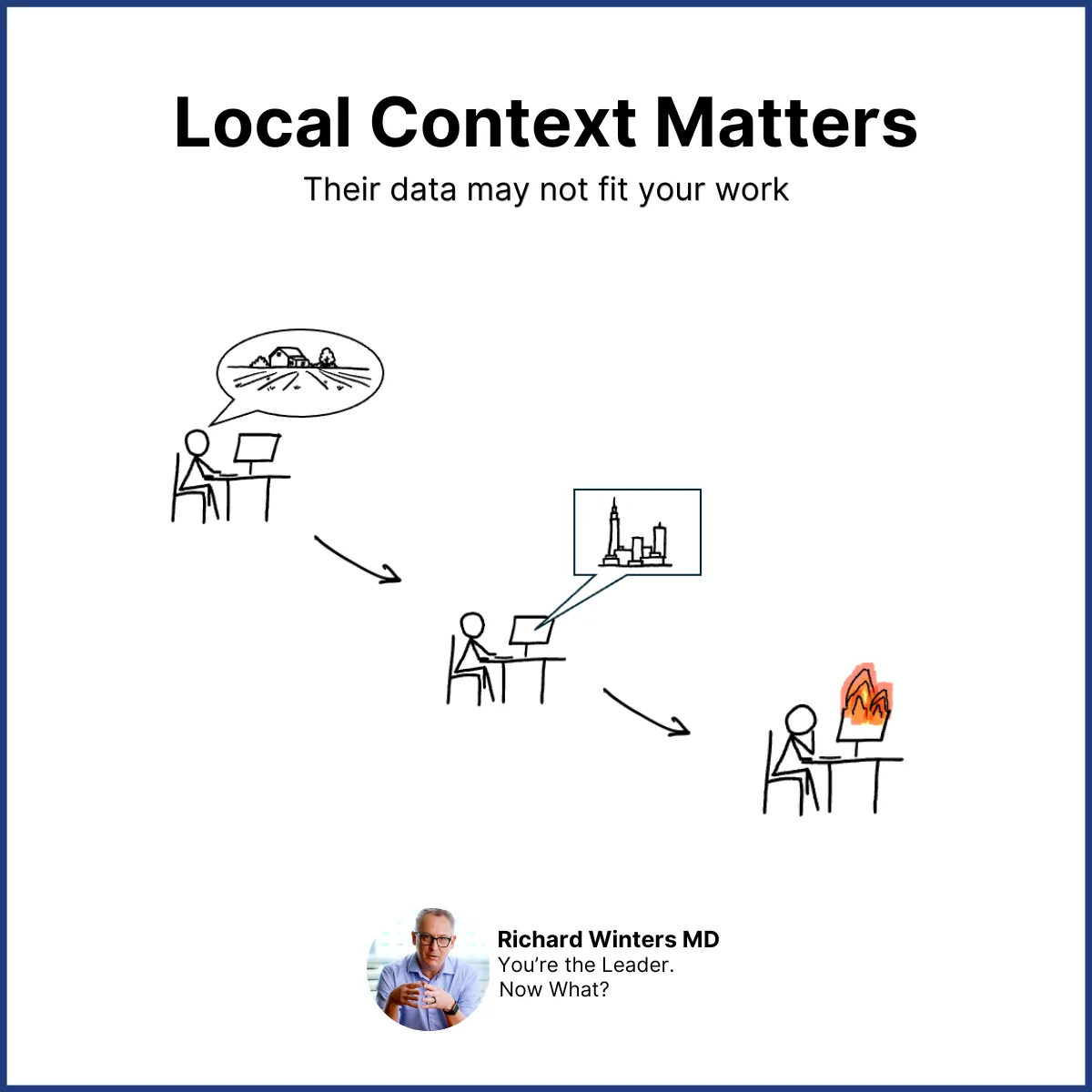
Local context matters.
A solution developed from data in an inner-city hospital may not fit a community hospital. A workflow that makes sense in California may not make sense in Texas. A dashboard built around someone else’s assumptions may miss what matters in our own environment.
So the question is not only, “Which AI tool should we use?” It’s also: Can we access the data we need? Can we validate vendor solutions against our own local reality? Can we work with the data from our own practice?
Security, validity, and governance matter. At the same time, we need to recognize the strategic opportunity.
If AI is going to help us improve care, it has to understand the environment where care is actually delivered.